James P. Blaylock, twice winner of the World Fantasy Award, is a southern California writer whose short stories, novels, and collections have been published around the world. He was one of the literary pioneers of the Steampunk movement along with Tim Powers and K.W. Jeter. His short story "Unidentified Objects" was nominated for an O. Henry Award in 1990. Despite his close association with Steampunk, most of his work is contemporary, realistic fantasy set in southern California. His novel The Rainy Season was chosen by Orange Coast Magazine as one of the ten quintessential Orange County novels.

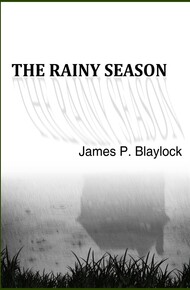
The Ghosts Trilogy 3 - The Rainy Season by James P. Blaylock

It's a gray, wet winter in southern California, and Phil Ainsworth is alone. The sudden death of his young wife has left him shaken, and he gets eerie sensations as he roams around the big, old house he inherited from his mother. He's sure he's seen people snooping around his property, by the old well that, in this wet weather, always seems ready to overflow. How much is real and how much is in his head? That's the question.

A late-night phone call brings more bad news: Phil's sister has died, leaving her ten-year-old daughter Betsy an orphan and naming Phil as guardian. It seems like a bad time to bring a child into this unhappy house, but Phil had always promised he'd take care of Betsy - and now she's all the family he has left.

What he can't know is that Betsy is a very special child. She has the ability to sense the powerful emotions of the past, to hear voices of the dead, and to see the uncanny powers that are closing in around this house...

James P. Blaylock has set the standard for the contemporary ghost story. The Washington Post called him "a master." Dean Koontz has hailed his writing as "first rate." A brilliant blend of psychological insight and unearthly phenomena, The Rainy Season blurs the lines between the past and the present, the living and the dead, fantasy and reality.

 

REVIEWS

  • "Blaylock's evocative prose and studied pacing make him one of the most distinctive contributors to American Magical Realism."

    – Library Journal
  • "Blaylock is one of the most brilliant of that new generation of fabulist writers."

    – Washington Post
  • "A magical world, magically presented... having journeyed there, you will not wish to leave, nor ever to forget."

    – Philip K. Dick
 

BOOK PREVIEW

Excerpt

1

COASTAL SOUTHERN CALIFORNIA is a semiarid land crosshatched with mountain chains, narrow valleys, and dry riverbeds. The upper reaches of its steeply sloped canyons are nearly impenetrable—its sunny broken rises blanketed with greasewood and sumac and mesquite, dense miserly plants that survive eight or ten rainless months each year. The shady slopes, turned away from the sun, are covered with oak and fern, and at higher elevations maple and big cone pine. On the flats and along streambeds grow sycamore and alder, their roots sunk deep into the loamy alluvial soil. In rare decades when one drought year follows another, stands of alder along dry creeks wither and die as groundwater falls away deeper and deeper into the earth.

But this parched landscape is largely a surface phenomenon, for beneath its plains and arroyos and rocky gullies lie vast aquifers of water-bearing rock. Unceasing and invisible cataracts flow beneath the dry beds of intermittent streams, and where strata of granite and basalt lie close to the surface, the water above is forced upward until it lies in quiet, leafy pools in the shaded canyons, even in the driest years. Elsewhere, almost as a counterpoint to these solitary pools, creek water tumbling down rock-strewn beds might vanish suddenly into the ground as if into a chasm, and within a few short yards, what had been a flowing stream over mossy stones and boulders is a desert of dry sand and rock, littered with broken limbs and fallen leaves, its scoured stones bleached white in the sun.

And then with winter rains the groundwater rises again, and dry springs bubble to life. In the wet years, once in a decade or two, long-vanished waterfalls abruptly reappear, coursing down sheer canyon walls and feeding creeks and streams that have grown overnight into deep torrents of rushing water. In the otherwise silent darkness of the canyons, one's sleep is troubled by the water-muffled clatter of heavy boulders shifting and rolling in swollen streams. Unwary canyon residents awaken to find themselves hopelessly stranded: crossings washed out, footbridges undermined, narrow hillside roads swept utterly away, paths blocked by fallen trees.

And even on the plains below the mountains and in the hollows of grassy foothills, shallow, spring-fed pools arise in once-dry meadows, and water seeps into long-abandoned farmhouse wells like the revived ghosts of lost and despaired-of memories. …