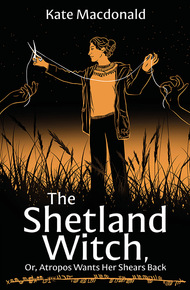
Excerpt
Prologue to The Shetland Witch
Ancient stone walls run all over the inhabited islands in Shetland. Massive cairns and stone markers were built in high places around the coastline, as watchtowers and monuments, and waymarks. Carefully made circular stone brochs sit near water, defending islands and harbours. There are hundreds of standing stones: lonely monuments, or stubby arrays lined up in rows, buried under grass or pointing at a small hill. Three modest stone circles survive, on the islands furthest north.
The Fetlar circle might be the petrified remains of a party of trows. The Unst circle might be an ancient cremation cemetery. The Yell circle might be what was left when Thor had finished playing a game of dice. Nobody knows.
Shetland is at the ends of the earth, a sandy northern archipelago covered in peat muirs and wide flat glens heading north to the Arctic. The headlands are blunt-nosed or ragged with skerries, braced against the wind and the waves. The land undulates between whale-backed hills and small lochs feeding burns that tumble down to the sea. The hills are bare and mottled with red-brown peat moss, yellow and green tussocky grass and deep-brown soil where the sand has blown away. Limestone outcrops as grey rock and shiny white quartz. There are hardly any trees. They only grow in the lee of some hills and houses in the better soil, and only thrive when they're not exposed to the salt in the air.
There are more than five hundred islands in Shetland, but humans only live on twenty of them. Other things live on the other islands, permanently or just passing through. A long time ago some of these things must have spoken to human women when they were out looking for a sheep in the fog or down at the byre in the early morning. Some things might have taught the women special skills, with air and time and silence. It took a fair few years, mind, but good knowledge came of it.
The women who learned how to mend and heal became the witches. They worked for the good of the folk, and they were well regarded. This was a very long time ago, before the monks came, before the first kirk was built. Once Shetland was Christian, witches kept their work out of sight. They healed and mended where it was needed, and more or less they mostly stayed out of trouble. For centuries there were Shetland witches in many places. Yet over time all these places lost their witches through natural causes. Now there are only three Shetland witches. Meet them now.
Ishabel is the eldest. Professor Ishabel Inkster DSc DPhil, professor emerita of botany and plant science at universities in Scotland and Kenya. Lead author of four standard textbooks. Former botany editor of Nature. She is retired and living with intermittent chronic fatigue due to long covid. She is the wisest of the Shetland witches by virtue of her exceedingly long life and great experience. She is respected by her neighbours in Unst. Her garden is remarkably successful. She has deep roots in Shetland. Her husband died a long time ago.
Then there is Maggie Forbister RSA, a tall, rangy artist who lives happily alone in a messy house on the edge of Baltasound in Unst. She studied art in Glasgow and has had many exhibitions. Two works by her sit in the permanent collection of the Scottish National Portrait Gallery. She sells her paintings through Shetland's art galleries and gift shops, and through a website managed by a friend in the know. Maggie is impetuous, reckless, powerful, affectionate and determined. She is tough on fools. She's younger than Ishabel, and her hair is still red. She changes the sculptures in her garden with the seasons.
Now meet Avril Simbister, who is younger still. Avril is too busy running a wildlife rescue centre and managing the North Isles' nature reserves. She trains volunteers and is always at the call of the tourist authorities. She lives in North Mainland in a rented house in Brae, from which she can whizz up and down the roads in her red electric car, which does quite remarkable mileage for the number of charging points available. She also keeps an eye on her mother in Lerwick, when her mother will admit to needing help. Avril got away from Shetland for four years to study for her business degree, and she played the fiddle in a jazz trio before the islands claimed her back. Avril is the strongest witch, and this frightens her.
On what do the Shetland witches exercise their talents? Cliff rescues, now and then. Boats in trouble at sea. The birds that need keeping an eye on. An occasional magical incursion. Preventing mischief or worse by the last of the trows, of course. Routine maintenance of the protections established centuries ago by a much larger population of sister witches. They do their work patiently, but they're feeling stretched. Avril says something about looking to the hills from whence cometh their help, but she's only joking; she was brought up in the kirk. Maggie is concerned about the new satellite launch station at Saxa Vord. Ishabel just wants to feel properly well again, but she also supposes that she may finally be getting old. They are looking for new recruits, natural witches they can trust.